Lesson
Say a letter and its sound in a gentle beat; connect it to a familiar object, such as B and a ball.
 J.R.E.X.Y.L.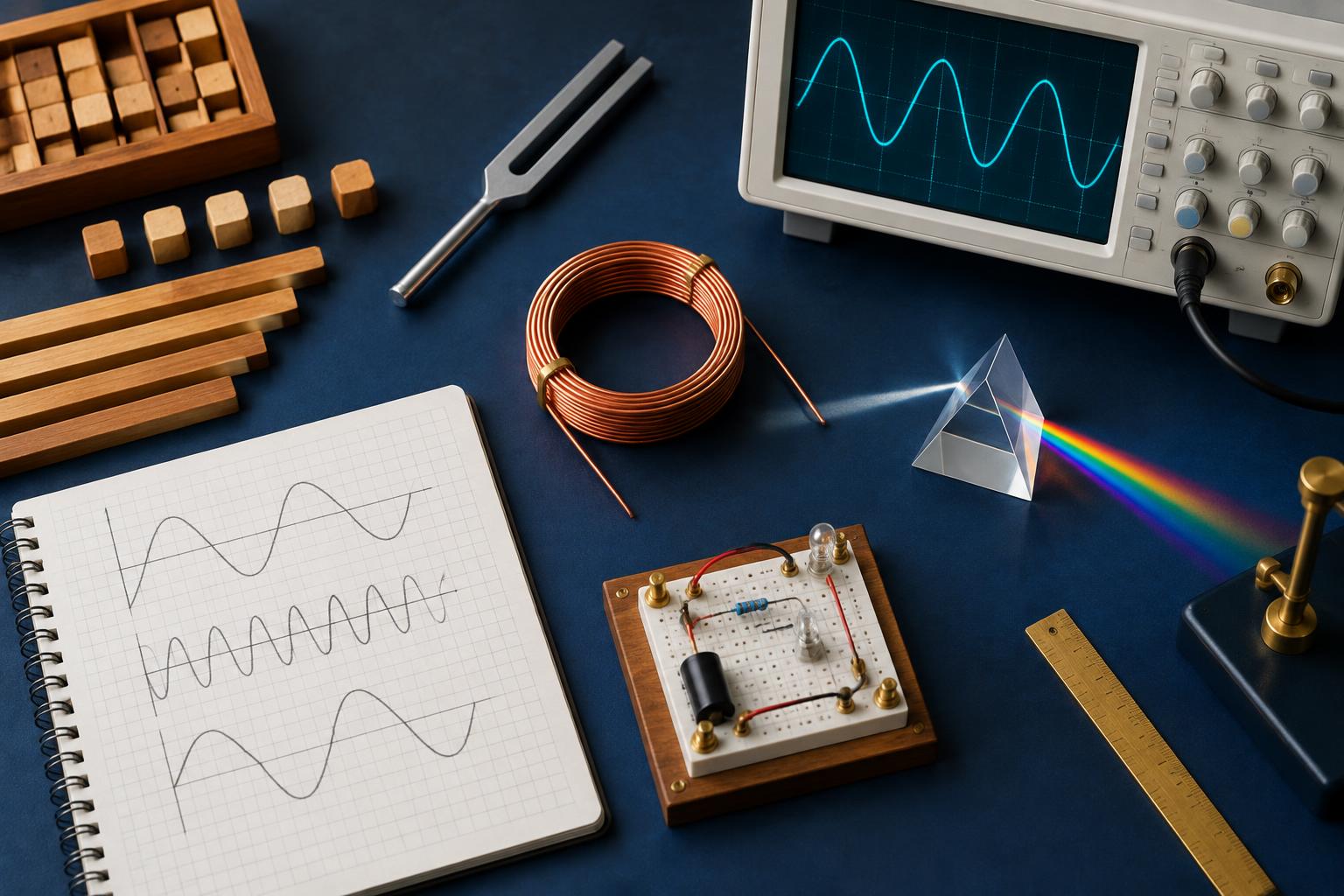
J.R.E.X.Y.L. Foundation vision · Education
Proposed framework · Currently in design
We Teach Students How to Think,
Not What to Think.
Teaching Minds to Think, Not What to Think.
Independent reasoning. Scientific literacy. Critical thinking. Creativity. Engineering. These are commitments within the Jrexyl Foundation's developing education vision—not claims of outcomes already achieved.
The proposed JREXYL Rhythmic Learning Initiative begins with rhythm-supported early childhood learning and progressively grows into an interdisciplinary curriculum built around investigation, innovation and discovery.
Rhythm is a foundational teaching methodology, not a universal explanation of learning or a claim that all children learn the same way. Repetition, sound, movement and visual patterns would be connected to meaning and adapted alongside students' cognitive development.
As learners grow, the emphasis shifts toward questioning, mathematical reasoning, engineering, experimental design and independent evaluation of evidence. Understanding beyond memorization matters at every stage.
Within the broader JREXYL Futureproof Academy vision, the initiative would help make knowledge and practical capability accessible—including to young people without a dependable safety net. This is a developing vision, not an operating school or accredited institution.
The initiative has not launched, received accreditation or demonstrated measured educational outcomes. Lesson ideas and activities below are illustrative proposals; their effectiveness would need careful evaluation before any claims could be made.
The developmental pathway
From a child's first pattern to a student's original investigation. Every stage connects ideas to tangible observations, meaningful language and practical problem-solving.
Stage 1 · Ages 2–3
Letters, numbers, sounds, vocabulary, counting and basic patterns through rhythmic repetition, singing, movement and interactive play.
Say a letter and its sound in a gentle beat; connect it to a familiar object, such as B and a ball.
Build a counting garden with one to five large paper flowers. Give each flower one beat and one number.
Compare a fast and a slow beat. Sort movements or visual pulses by speed, then count the same objects without music.
Illustrative curriculum ideas, not established outcomes. Ages are a flexible design guide, not ability labels. Activities would require educator review, appropriate supervision and accessible alternatives; no hazardous biological, electrical or genetic-engineering work is proposed for unsupervised students.
An illustrative preschool experience
Three gentle explorations connect beats to quantities, words and repeating shapes, followed by an untimed, silent understanding check. No hearing or physical tapping is required.
Explore together · Ages 2–5
One apple, one beat, one number.
Look, listen, point, press a key or simply watch with an adult. Tapping and hearing are never required. An adult can say the printed words aloud; the tones mark their parts.
Ready whenever you are.
Illustrative educational prototype—not a validated learning assessment. No competitive scores, advertisements, accounts or recording of child responses. Choices remain only in this page's temporary state.
The Science of Learning, Energy, Consciousness & Discovery
Students should be able to investigate the natural world without intellectual intimidation or predetermined conclusions. Scientific principles provide tools for exploring unanswered questions—not a reason to stop asking them. The standard of evidence applies equally to familiar explanations and unconventional ideas.
Supported by reliable observations and reproducible evidence within stated conditions.
Promising observations that require stronger controls, additional testing or independent replication.
Questions for which available evidence does not yet support a settled explanation.
Proposals that may inspire testable questions, but must not be taught as demonstrated facts.
Being open to a question does not make every explanation equally well supported. Confidence should track the quality and limits of evidence.
01 · Energy, frequency and vibration
Study physical properties through observation, mathematical reasoning and experimentation—not by treating scientific terms as interchangeable metaphors.
Energy describes a system's capacity to do work or transfer heat. Frequency counts cycles per unit time. Vibration is oscillatory motion; waves transfer disturbances and energy. Sound is a mechanical wave traveling through a medium, while electromagnetic waves can travel through a vacuum.
Electricity, magnetism and matter connect these principles to living systems and technology: electrical activity in nerves, ultrasound in medicine, optical communication, sensors, musical instruments and engineered materials.
Wave model · A simplified diagram, not experimental data.
How does string tension affect sound? How does shielding change a sensor reading? What measurements can separate a physical relationship from coincidence? Students would identify variables, units, uncertainty and alternative explanations.
02 · Consciousness, human intention and physical matter
Mental processes, physiological activity and environmental conditions are legitimate subjects of scientific study. Precise questions help distinguish established relationships from unverified claims.
Attention, perception, brain activity, stress responses and behavior provide measurable ways to study human experience. Intention can affect the world through actions, communication and bodily processes. Claims of direct mental influence on external matter, without an identified physical pathway, require separate and compelling evidence.
The nature of subjective experience remains an active area of neuroscience and philosophy. An unresolved question is not evidence for a particular speculative answer.
Masaru Emoto claimed that words, music or human intention affected the appearance of crystals formed from freezing water. His photographs and associated experiments can be examined as a case study in observation, interpretation and controversial claims.
A published pilot study reported differences in aesthetic ratings of crystal images. That report does not establish that intention changes water's molecular structure. Reliable independent replication has not established the broader claim.
Students would examine subjective beauty ratings, image-selection bias, blinding, temperature, impurities, sample handling, small samples and selective reporting. An improved approach would randomize and code identical samples, standardize freezing and photography, define inclusion rules and outcomes in advance, use blinded analysis, report all results and invite independent replication.
Exploring a disputed idea does not require accepting it. A null result also does not settle every possible version of a claim; conclusions should match what a well-designed experiment actually tests.
03 · Quantum physics and emerging questions
Age-appropriate mathematics, probability, theoretical models and established experimental evidence should come before extraordinary interpretations.
Wave-particle duality, superposition, uncertainty, quantum measurement and quantum information have precise mathematical meanings and experimental foundations. Models and simulations would help students understand both their explanatory power and their limits.
Quantum processes underlie chemistry. Research examines specific mechanisms such as tunneling in biological reactions, energy transfer and radical-pair models of magnetoreception. The evidence and open questions differ for each mechanism; none alone establishes a quantum explanation of consciousness.
Proposed links between quantum phenomena and consciousness remain hypothetical. In quantum experiments, measurement involves physical interaction; it does not establish that a conscious mind is required or that intention controls outcomes.
Students can compare interpretations, formulate precise predictions and ask what evidence would distinguish competing ideas. Curiosity is welcome; speculative theories must retain their labels.
04 · Genetics, biology and engineering
Proposed pathways connect cellular biology, genetics, neuroscience and biotechnology with mechanical and electrical engineering, robotics, artificial intelligence and materials science.
Explore cells, inheritance and neural signaling using safe models, public datasets and simulations. Discuss biological complexity, consent and research ethics.
Create sensor systems, coded simulations and robotic prototypes. Test constraints, document failures and improve designs through measured evidence.
Evaluate AI limitations, bias, safety and the social effects of technologies. Genetic-engineering concepts would be taught with ethical context and appropriate supervision, not unsupervised biological experimentation.
05 · The JREXYL scientific inquiry methodology
Observe → Question → Hypothesize → Experiment → Measure → Analyze → Replicate → Refine → Discover. A repeatable framework—not a promise that every experiment produces a discovery.
01 / 09 · Scientific inquiry
Notice what happens. Separate a direct observation from an interpretation.
A ruler makes a sound when its free end vibrates.
Scientific understanding grows through continued investigation. Existing explanations may be refined when reliable new evidence emerges. Students should be free to challenge assumptions while making their reasoning, methods and evidence open to scrutiny.
06 · Research and future partnerships
The initiative is in design and seeks potential collaboration with educators, scientists, engineers, universities, laboratories and independent researchers.
Future objectives include expert review, age-appropriate content, accessible alternatives, ethical safeguards and clear evidence standards.
Any future pilots would require careful planning, appropriate permissions and transparent evaluation of learning beyond repetition or memorization.
Longer-term goals include supervised experiments, interdisciplinary scientific projects and engineering work connected to real community questions.
No current partners, funding, endorsements, completed research or measured outcomes are claimed. Foundation education and the Futureproof Academy remain developing visions within Jrexyl's broader commitment to community capacity.
The educational commitment
“At JREXYL, education is not the memorization of accepted answers. It is the development of minds capable of asking better questions, discovering new possibilities, testing ideas, and advancing human understanding.”Return to the Jrexyl ecosystem